Toll Road Scam Text: How to Spot the Fake 'Unpaid Toll' Message (2026 Guide)
The fake unpaid-toll text is the #1 smishing scam in America — FBI IC3 logged 60,000+ reports in a single month. Learn the 7 red flags, the real toll agencies' contact rules, and the 24-hour recovery steps if you already clicked or paid.
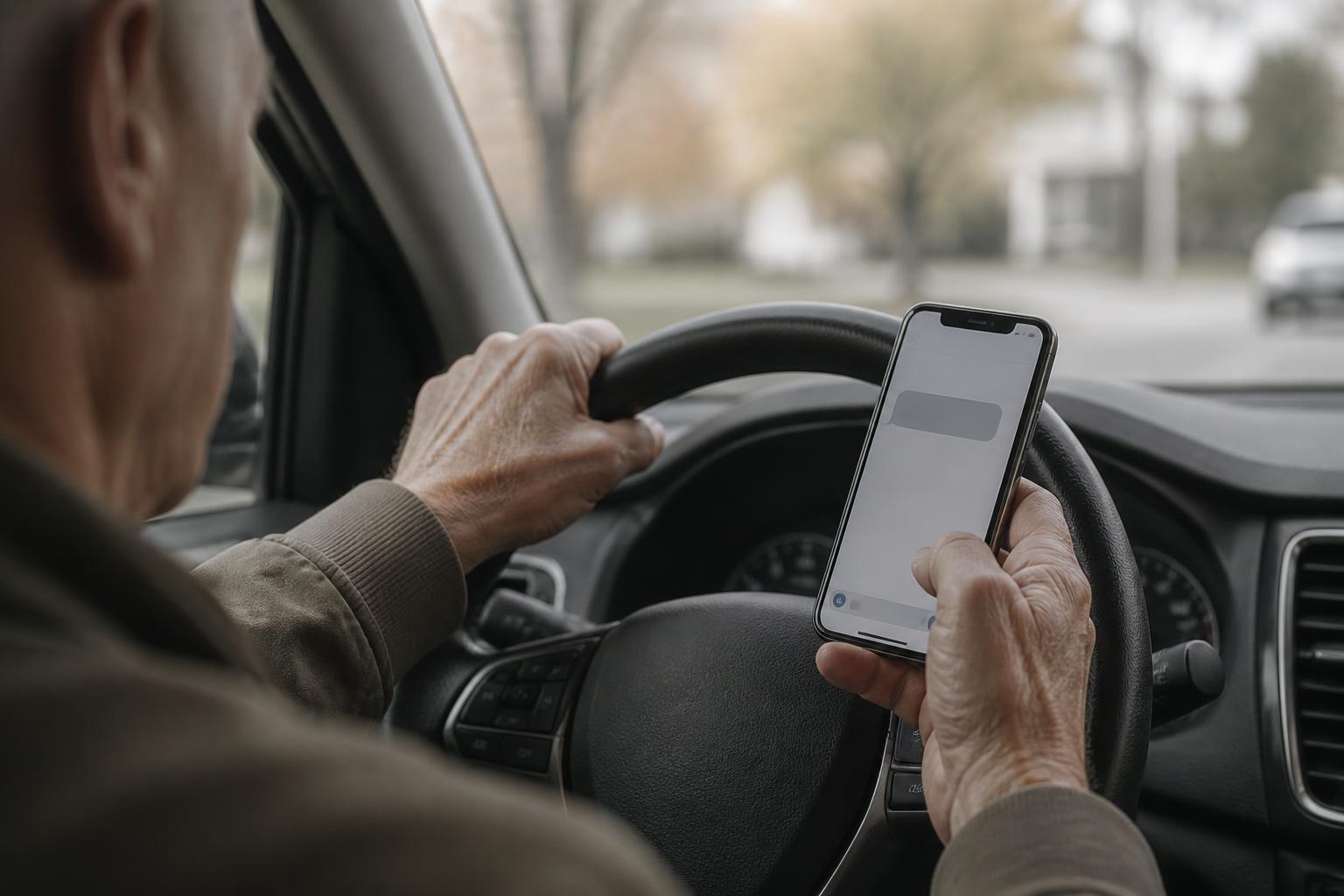
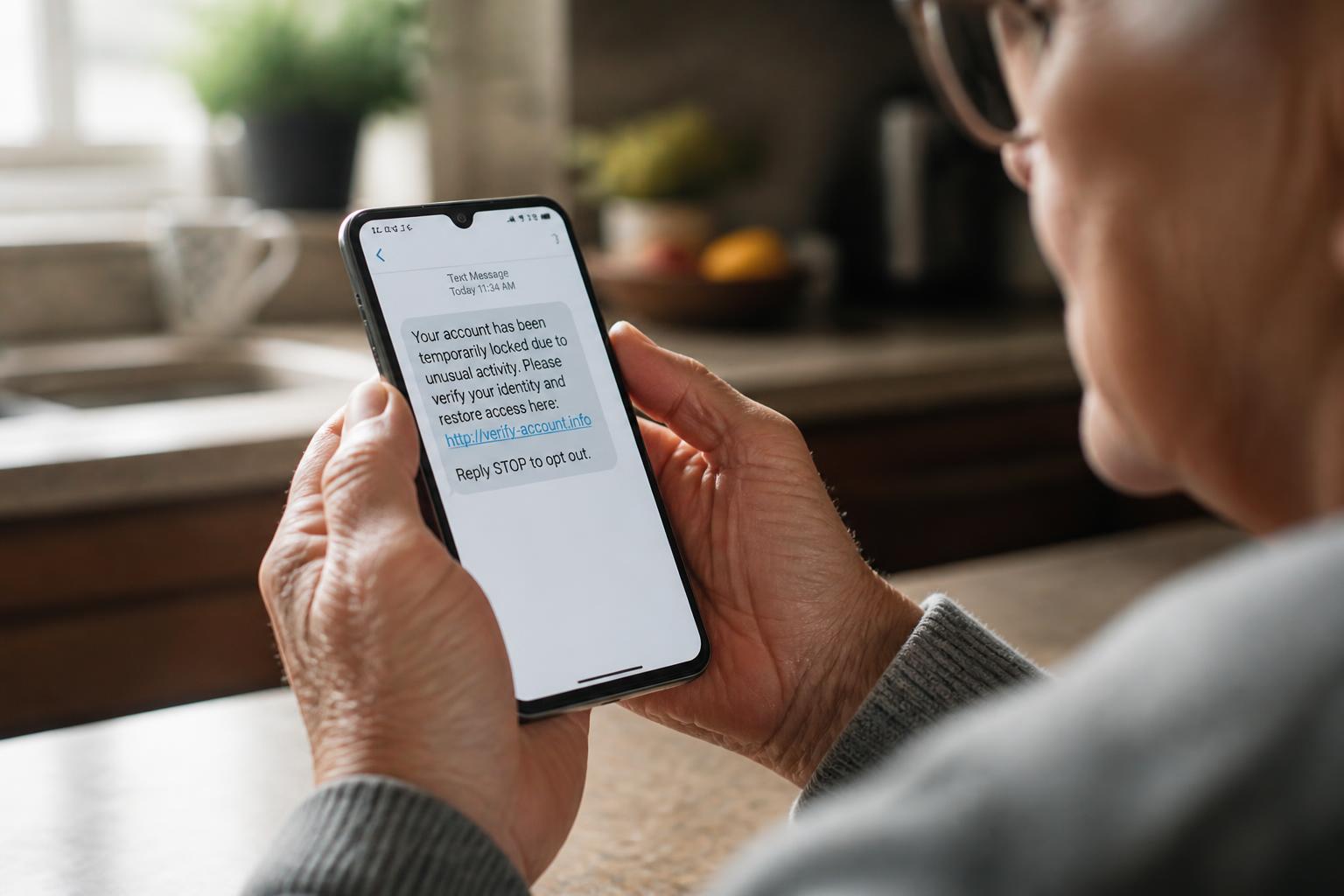
Your phone buzzes. "Final Notice: You have an unpaid toll of $6.99. Pay now to avoid a $50 late fee, license suspension, and legal action." There's a link. There's a deadline. It looks official — sometimes it even names your state's real toll agency (E-ZPass, SunPass, FasTrak, TxTag, NC Quick Pass). It is a scam. The FBI's Internet Crime Complaint Center (IC3) received more than 60,000 reports of this exact scam in a single month of 2024, and the texts have only multiplied through 2026. Here is how to spot one in under 30 seconds — and what to do if you already tapped the link.
The 7 red flags in every fake toll text
- It arrives by text message. Real toll agencies do not initiate collections by SMS — they mail paper invoices to the registered address of the vehicle's license plate.
- The amount is small but the threat is huge: "$6.99 owed, or $50 fine + license suspension + court action." Real toll late fees do not include license suspension over a missed $7.
- The link is NOT a .gov or the agency's real .com. Look for misspellings: ezpass-gov.com, ezdrivema-pay.com, sunpasstoll.xyz, ncquickpass-sec.com. Real domains: e-zpassny.com, sunpass.com, thetollroads.com, txtag.org, ezdrivema.com — and most state toll authorities use .gov.
- The text is sent from an iMessage email address (a long string @icloud.com, @gmail.com, @hotmail.com) or a foreign country code (+63 Philippines, +60 Malaysia, +44 UK). Real toll agencies use U.S. short codes.
- It demands payment within hours or "by end of day." Real toll violations give you weeks to dispute by mail.
- It asks you to "reply Y, then re-open the link" — this is a known iMessage trick to bypass Apple's built-in link blocking for unknown senders.
- The text arrives in a state you've never driven in. Got an "E-ZPass NY" text and you live in Arizona? Scam.
What happens if you tap the link
The link opens a near-perfect clone of the real toll agency's payment page — same logo, same colors, same fonts. You enter your name, address, credit card number, CVV, and billing ZIP. The site shows a "Payment Successful" confirmation. Within 24–72 hours, three things happen:
- Your card is charged the fake toll amount ($6.99) — small enough to slip past most card-alert thresholds.
- Your card data is sold on Telegram fraud channels, where it's used for high-dollar test charges (Uber, Apple, Amazon gift cards) and then drained.
- Your phone number is added to a "confirmed responder" list and resold — which is why one toll text becomes ten different scams (USPS, IRS, Amazon, bank fraud alerts) over the next 30 days.
The 5 most common toll scam scripts circulating in 2026
Script 1 — "Final Notice" with a tiny amount
"Final Notice: You have an unpaid toll of $6.99. To avoid a $50 late fee and possible license suspension, please pay before [today's date] at [shady link]." The classic. The tiny amount is psychological — most people think "I'll just pay it to be done with it" rather than fight a $7 charge.
Script 2 — "E-ZPass account suspended"
"E-ZPass Alert: Your account has been suspended due to an outstanding balance. To reactivate and avoid a $150 reinstatement fee, verify at [link]." Even if you don't have an E-ZPass account, the panic of "suspended" pushes people to click.
Script 3 — DMV-branded toll notice
"[Your state] DMV: Failure to pay your toll has resulted in a hold on your vehicle registration. Resolve at [link] before [date] to prevent license suspension." The DMV does not send toll collection texts. Toll agencies and DMVs are separate, and neither texts.
Script 4 — Out-of-state "vacation toll"
"FasTrak: You incurred a $14.20 unpaid toll while driving in California on [recent date]. Pay now to avoid penalties." Targets people who actually traveled recently — the dates are guessed, but enough people are on the road that some hit.
Script 5 — The follow-up "refund" scam
After you pay the fake toll, a second "agent" calls or texts: "Our records show you were double-charged. To process your $6.99 refund, we need your bank routing number." This is the second-stage scam — they already have your card; now they want your bank account.
What to do in the first 24 hours if you already paid
Speed matters. Most card fraud is reversible if you call within 24 hours. Work this list in order:
- Call your card issuer's fraud line on the back of your card — NOT the number in any text or email. Chase 1-800-432-3117, Bank of America 1-800-732-9194, Wells Fargo 1-800-869-3557, Citi 1-800-950-5114, Capital One 1-800-227-4825, Discover 1-800-347-2683, Amex 1-800-528-4800.
- Say: "I entered my card details on a phishing site impersonating a toll agency. I need to dispute the charge as fraud, freeze this card, and have a new card issued." Get a fraud case number in writing before you hang up.
- Set a fraud alert with one credit bureau (Experian 1-888-397-3742, Equifax 1-888-836-6351, TransUnion 1-800-680-7289) — they're required to notify the other two. It's free and lasts 1 year.
- Change the password on any account that uses the same password you may have entered. Scam pages often quietly capture extras.
- Report the text: forward it to 7726 (SPAM) for your carrier, then report at IC3.gov (FBI's Internet Crime Complaint Center) and ReportFraud.ftc.gov.
- Delete the text. Do NOT reply STOP or anything else — that confirms your number is active.
What to do if you only clicked the link (but didn't pay)
- Close the browser tab immediately. Do not re-open it.
- Clear your browser cache and cookies for the last hour.
- Run a malware scan if you're on Android (most iOS users are safer — Apple's sandbox blocks drive-by installs, but log out and back in if you used any saved auto-fill).
- Watch your card statements for the next 30 days even if you didn't type your card — sometimes the page captures auto-filled data.
- Forward the text to 7726, then delete.
How to verify a real toll charge in 60 seconds
- Check your mailbox. Real toll violations arrive as paper invoices with your license plate, vehicle description, and the time/place of the toll.
- Go directly to the toll agency's official website — type it yourself, do not click a link. E-ZPass NY: e-zpassny.com. SunPass (Florida): sunpass.com. FasTrak (California): thetollroads.com or bayareafastrak.org. TxTag (Texas): txtag.org. NC Quick Pass: ncquickpass.com. EZDrive MA: ezdrivema.com. For your state, search "[your state] toll authority site:.gov".
- Log in to your account on the official site — if there's no balance there, there's no toll.
- Call the agency's customer service number listed on the official site — never the number in a text.
Frequently asked questions
Do toll agencies ever text you?
Some agencies (like E-ZPass) send optional account alerts via text if you've signed up and given them your number — usually "low balance" reminders. They will never text a payment link to someone who hasn't enrolled, and they will never threaten license suspension by text.
What happens if I ignore the text?
Nothing. No real consequence comes from ignoring a scam toll text. There is no real toll, no license suspension, no court date. The only risk is if you engage with it. Forward it to 7726 and delete.
Why am I getting toll texts when I don't even drive on toll roads?
Scammers blast millions of numbers from leaked databases. They don't know whether you drive, own a car, or live in a state with toll roads. They're playing the odds — even a 0.1% response rate is profitable.
Is the link safe to tap if I don't enter anything?
Tapping alone usually won't install malware on iPhone, but it confirms your number is live (resulting in more scam texts), and on Android some pages can attempt drive-by downloads. The safest rule: never tap any link in an unsolicited text from a sender you don't recognize.
Can I get my money back if I already paid?
Yes, in most cases — if you act fast. Credit card chargebacks for fraud are protected under federal law (Fair Credit Billing Act). Debit card fraud is also reversible but the time limits are tighter (report within 2 business days to limit liability to $50). Call your bank's fraud line today, not tomorrow.
How do scammers know my name and state?
Most don't — the generic texts go to everyone. Targeted versions use data from breaches (your phone number + ZIP code is enough to guess your likely toll agency). It feels personal, but you were one of millions on the blast list.
Where do I report a toll scam text?
Three places: (1) Forward the text to 7726 (SPAM) — works on all major U.S. carriers and feeds carrier blocklists. (2) File a report at IC3.gov (FBI). (3) File at ReportFraud.ftc.gov (FTC). Reporting is free and takes 90 seconds.
How Safe Retire Watch helps
Members get real-time alerts the moment a new toll, USPS, IRS, or bank smishing script starts hitting U.S. phones — plus a one-page Emergency Action Guide listing every major card issuer's fraud line and the exact words to say to get a charge reversed. Built for retirees and their families: plain English, large readable text, no jargon. Plans from $9/month with a 30-day money-back guarantee.
Paste a suspicious text or email — instant AI verdict.
Paste any URL before you click — free phishing check.
Get scam alerts before they reach you
Safe Retire Watch sends real-time alerts when new scams target retirees in your state. From $9/month. 30-day money-back guarantee.
Get Protected