AI Voice Cloning Scams: The 10-Second Family Safe Word That Stops Them
Scammers can clone your grandchild's voice from a 3-second TikTok clip. Here's how AI voice scams work in 2026 and the 10-second family safe word that beats them every time.

In 2026, a scammer needs just 3 seconds of someone's voice — scraped from a TikTok, an Instagram reel, or a YouTube comment — to clone it convincingly. The cloned voice can then cry, beg, and call you Grandma in the exact accent of your real grandchild. This isn't science fiction; the FBI has been warning about it since 2023. Here's how to beat it.
How an AI voice clone scam actually unfolds
- Scammer finds a short audio clip of your relative on social media.
- They feed it into a voice-cloning tool (some are free, all are fast).
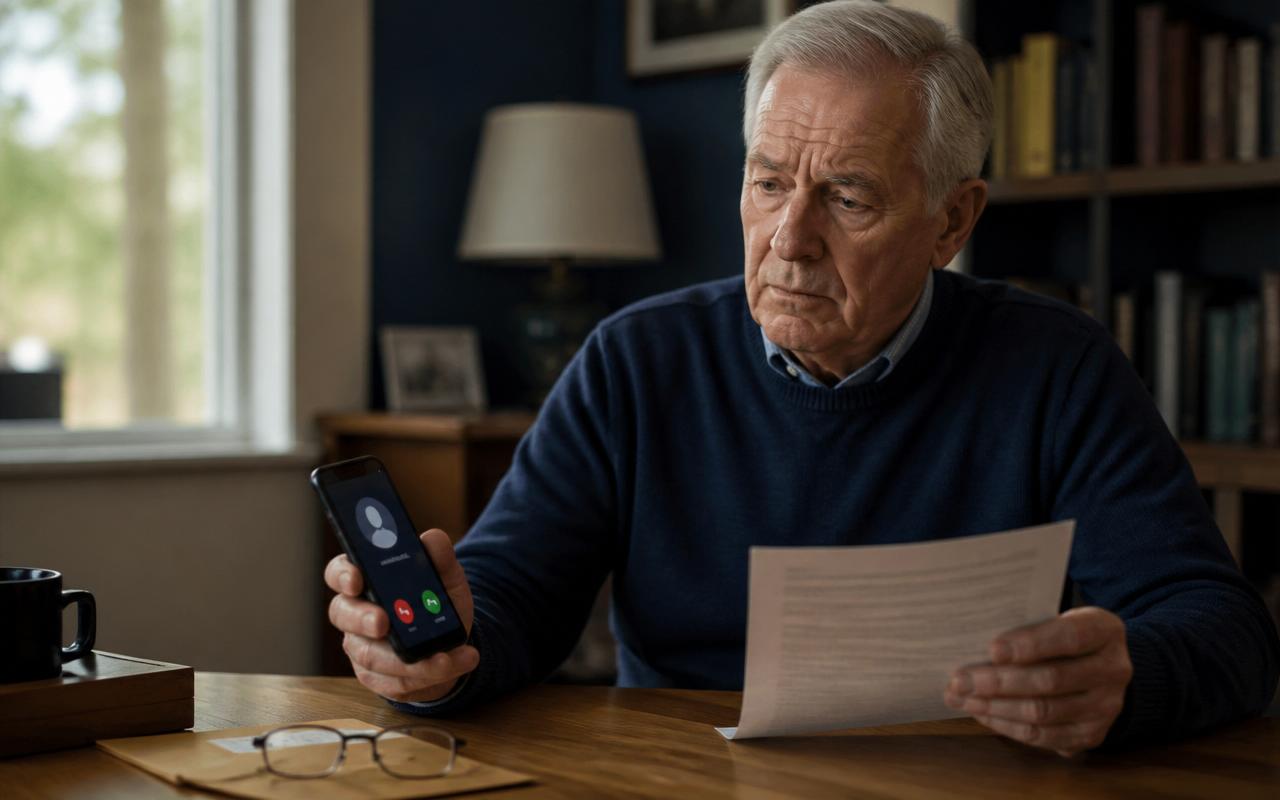
- They call you from a spoofed number — sometimes spoofed to look like your relative's real number.
- The cloned voice delivers a panicked emergency script: car accident, jail, hospital, kidnapping.
- They demand money in minutes — before you can hang up and verify.
Why the old advice ("You'll know the voice") fails
Human ears cannot reliably tell a good AI clone from the real person, especially over a phone line where audio is already compressed. Studies from University College London put detection accuracy at about 73% — meaning roughly 1 in 4 cloned voices fool listeners. Over a panicked, tearful call, accuracy drops further. You need verification that doesn't rely on your ears.
The family safe word: how to set one up tonight
- Pick one word together. It should be random and unrelated to your family — "banjo," "pineapple," "Saturn," "meatloaf."
- Tell every adult in the family. Kids over 10 can be in on it too.
- Never post it online, never text it, never email it. Spoken only.
- Rule: anyone claiming to be family in an emergency must say the safe word before you do anything — send money, share info, agree to a courier.
What to do if a cloned voice already called you
- Hang up. Call the real person on a number you already have.
- If you sent money, call your bank's fraud line immediately. Wire and Zelle transfers can sometimes be reversed within hours.
- Report the call to ic3.gov (FBI Internet Crime Complaint Center) and reportfraud.ftc.gov.
- Tell your family — the same scammer often hits multiple relatives in one day.
Safe Retire Watch members get a head start
We send real-time alerts when new AI voice-cloning scripts appear in your area, plus an Emergency Action Guide with the exact phone numbers to call and the order to call them in. From $9/month with a 30-day money-back guarantee.
Paste a suspicious text or email — instant AI verdict.
Paste any URL before you click — free phishing check.
Get scam alerts before they reach you
Safe Retire Watch sends real-time alerts when new scams target retirees in your state. From $9/month. 30-day money-back guarantee.
Get Protected