Does the IRS Call You? The Truth About IRS Phone Calls (2026 Guide)
The IRS almost never calls you out of the blue — and they NEVER demand gift cards, wire transfers, or threaten arrest. Here are the 4 rules real IRS calls follow, the 6 red flags of a scam call, and exactly what to do if you already paid.

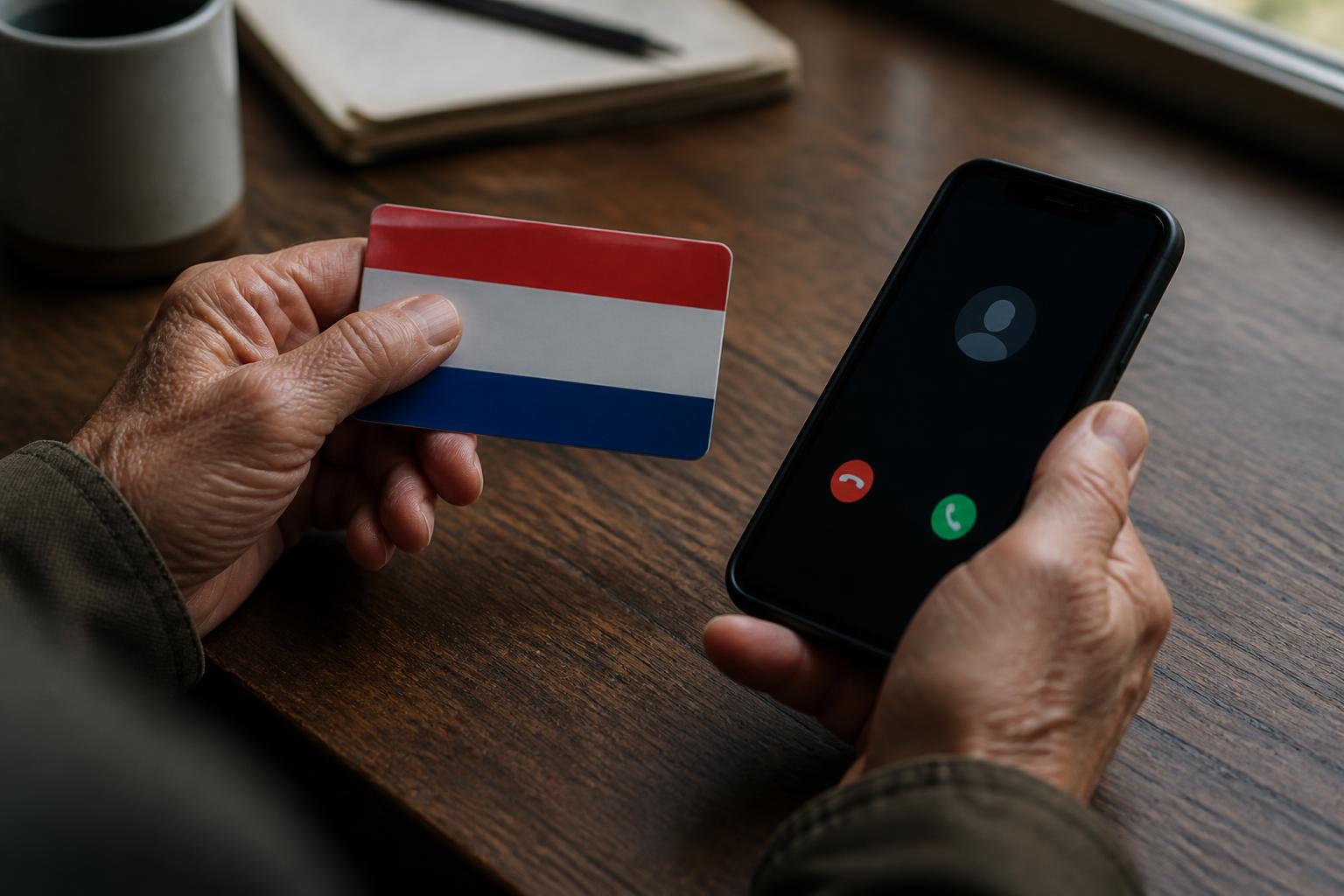
The phone rings. A stern voice says, "This is Officer Daniels with the IRS. You owe $4,873 in back taxes. A warrant for your arrest will be issued in the next 30 minutes unless you pay today by gift card." Heart pounding, many retirees pay. In 2024 alone, the FTC tracked more than $26 million lost to government-impostor calls, and IRS impersonation is the single biggest variant. So does the IRS actually call you? Here is the simple, honest answer — and the 6 red flags that prove the call on your phone right now is a scam.
Does the IRS call you? The short answer.
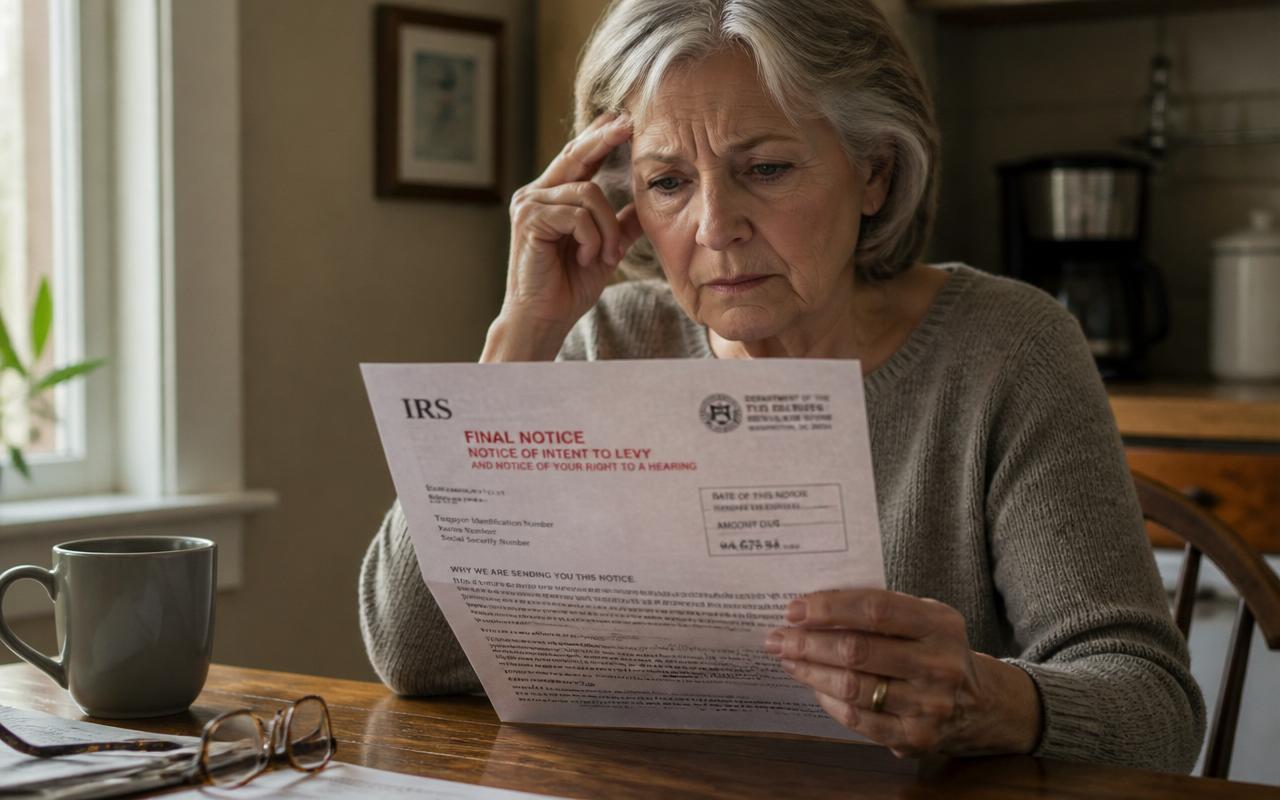
No — almost never. The IRS contacts taxpayers by U.S. Mail first. You will receive multiple letters (a CP14, then a CP501, CP503, CP504) before any other form of contact. The IRS may call you, but only after several mailed notices, and only in narrow situations: you have an open case with a specific IRS revenue officer, you have an overdue return, or you are being audited and have already received written notice. They will never call out of the blue, and they will never lead with threats.
The 4 rules every real IRS call follows
- You received multiple paper letters from the IRS in the mail FIRST. A real agent calling you can reference those notice numbers (CP14, CP501, LT11, etc.).
- The IRS will NEVER demand immediate payment by phone. They give you the right to question or appeal the amount owed, and they explain your taxpayer rights.
- Payments are made ONLY to the United States Treasury — never to a person, never to a department, never to a third-party processor. They never accept gift cards, wire transfers, cryptocurrency, prepaid debit cards, or Zelle.
- Real IRS agents will give you their name, badge (HSPD-12) number, and a callback number. You can verify them by hanging up and calling the IRS directly at 1-800-829-1040 (individuals) or 1-800-829-4933 (businesses).
The 6 red flags of an IRS scam call
1. They demand immediate payment by gift card, wire, crypto, or Zelle
This is the single biggest tell. The IRS does not accept iTunes cards, Google Play cards, Target cards, Bitcoin, Cash App, Venmo, Zelle, or wire transfers. If anyone calling themselves "IRS" tells you to go to Walgreens and buy gift cards, you are 100% on the phone with a scammer. End of story.
2. They threaten arrest, deportation, or that the local sheriff is on the way
The IRS cannot have you arrested by phone. Tax-debt collection is a civil process, not criminal. Real IRS agents do not threaten to send the police, revoke your driver's license, deport you, or suspend your Social Security number. Threats of immediate arrest are the #1 emotional weapon scammers use to keep you on the line.
3. The caller ID says "IRS" or shows a Washington, DC number
Caller ID is trivially spoofed. Scammers routinely fake "IRS", "US Treasury", "Washington DC", and 202 area-code numbers. Never trust caller ID alone — verify by hanging up and calling the IRS directly at 1-800-829-1040.
4. They ask for your Social Security number, bank account, or credit card to "verify" you
The real IRS already has your Social Security number — they do not need you to read it back to them. They will not ask for your bank login, debit-card PIN, or full credit-card number over the phone.
5. They tell you not to hang up, not to call anyone, not to tell anyone
Scammers know that the moment you call your accountant, your bank, your spouse, or your adult child, the spell breaks. So they manufacture urgency: "Stay on the line — if you hang up the warrant is automatic." Real IRS agents will happily give you a callback number and let you verify them.
6. The call comes as a robocall or prerecorded "final notice"
Any prerecorded voice claiming to be from the IRS — "This is the final notice from the Internal Revenue Service…" — is a scam. The IRS does not robocall. Hang up; do not press 1, do not press any number, do not call the callback number it leaves.
The 5 most common IRS scam scripts in 2026
Script 1 — Arrest warrant / back taxes
"This is Officer Mark Daniels, badge number 47291, with the IRS Criminal Investigation Division. You owe $4,873 in back taxes from 2019 to 2022. A federal warrant for your arrest has been issued. To stop the warrant, you must pay today by Apple gift card." Real IRS does not use "officers," does not call about old taxes out of the blue, and never accepts gift cards.
Script 2 — Social Security number suspended
"Your Social Security number has been suspended due to suspicious activity linked to your tax return. Press 1 to speak with an IRS agent." The Social Security Administration does not suspend SSNs. Ever. Hang up immediately.
Script 3 — Refund recalculation / "you're owed more money"
"Good news — we've recalculated your refund and you're owed an extra $2,150. We just need your bank routing number and account number to direct-deposit it." Real refund adjustments come by mail. Anyone asking for your bank credentials to "deposit" something is stealing from your account.
Script 4 — Stimulus / economic impact payment
"You qualify for a final 2024 stimulus payment of $1,400. To release the funds, verify your identity by reading us the code we just texted you." The IRS does not call about stimulus payments and does not need a text code to send you money you already qualify for.
Script 5 — Tax-relief / "settlement" follow-up
"Our records show you qualify for the IRS Fresh Start program — we can settle your $12,000 debt for $1,500 if you pay the processing fee today." Tax-relief calls are usually third-party marketing scams (and sometimes outright fraud). The real IRS Fresh Start Initiative exists, but the IRS does not cold-call to enroll you.
What to do during the call — the 30-second hang-up script
- Do not confirm your name, address, or any personal detail. Even "yes" is dangerous on a recorded line.
- Say nothing more than: "I don't take IRS business by phone. I'll call the IRS directly. Goodbye." Then hang up.
- Do NOT press any numbers, do NOT call the number they leave, do NOT call the number on caller ID.
- If you actually want to check whether you owe taxes, call the IRS yourself: 1-800-829-1040 (individuals, Mon–Fri 7am–7pm local), or log in to your account at IRS.gov.
- Block the number on your phone — though scammers rotate numbers daily, so don't be alarmed when a new one calls tomorrow.
I already paid. What do I do in the first 24 hours?
You are not alone, and you are not the first. Speed matters more than blame — every hour shortens the recovery window. Here is the exact order to work in.
If you paid by gift card
- Keep the cards and the receipts. Do not throw them away — the card numbers and the receipt are the evidence.
- Call the card issuer's fraud line immediately: Apple/iTunes 1-800-275-2273, Google Play 1-855-466-4438, Target GiftCards 1-800-544-2943, Walmart 1-888-537-5503, Amazon 1-888-280-4331, eBay 1-866-795-7969, Steam at help.steampowered.com.
- Tell them: "I was scammed by someone impersonating the IRS. I bought (amount) in gift cards. Please freeze the card numbers and refund what hasn't been redeemed." Some funds may be recoverable if you call fast.
- Report it: FTC at ReportFraud.ftc.gov and the Treasury Inspector General for Tax Administration (TIGTA) at 1-800-366-4484 or TIGTA.gov.
If you paid by wire transfer, Zelle, or Cash App
- Call your bank's fraud line IMMEDIATELY (it is on the back of your debit card). Chase 1-800-935-9935, Bank of America 1-800-432-1000, Wells Fargo 1-800-869-3557, Citi 1-800-950-5114, Capital One 1-800-227-4825, US Bank 1-800-872-2657.
- Say: "I was a victim of an IRS impersonation scam. I need to dispute a wire/Zelle as fraud and request a recall." Under 2023 Reg E updates, banks must investigate unauthorized transfers; even authorized-but-fraudulent transfers may be reversible if you call within hours.
- Get a fraud case number in writing before you hang up.
- Report it: TIGTA 1-800-366-4484 and FTC ReportFraud.ftc.gov.
If you gave out your Social Security number
- File IRS Form 14039 (Identity Theft Affidavit) at IRS.gov/identitytheft to flag your tax account.
- Place a free 1-year fraud alert with one credit bureau (Experian 1-888-397-3742, Equifax 1-888-836-6351, TransUnion 1-800-680-7289) — they are required to notify the other two.
- Consider a free credit freeze with all three bureaus to block new accounts being opened in your name.
- Report identity theft at IdentityTheft.gov — it generates a free recovery plan and an FTC affidavit.
How to verify a real IRS issue in 60 seconds
- Check your physical mailbox — real IRS issues arrive as paper letters with a notice number (CP14, CP501, LT11, etc.) in the top right corner.
- Log in to your IRS account at IRS.gov/account — you can see your balance, payment history, and any notices on file.
- Call the IRS directly at 1-800-829-1040 (individuals) or 1-800-829-4933 (businesses) — never the number a caller gave you.
- If you have an existing case, your assigned IRS revenue officer's name and direct number is on the letters they have already mailed you.
Frequently asked questions
Does the IRS ever call you on your cell phone?
Rarely, and only if you already have an open case with a specific IRS revenue officer who has mailed you letters first. The IRS does not cold-call cell phones to collect taxes. If your very first contact from the "IRS" is a call to your cell, it is a scam.
Does the IRS call you about back taxes?
Only after multiple mailed notices. You will receive at least a CP14, CP501, CP503, and CP504 before any phone contact. And even then, the call will reference those notice numbers and never demand payment by gift card, wire, or crypto.
Does the IRS leave voicemails or send texts?
The IRS does not initiate contact by text, email, or social media — period. They do not leave "final notice" robocall voicemails. Any voicemail demanding callback to avoid arrest is a scam.
What does a real IRS letter look like?
Real IRS letters come in white envelopes from "Internal Revenue Service" with a notice number (CP or LT followed by digits) in the upper right corner, a tax year, and the specific amount owed. You can look up any notice number at IRS.gov/notices to confirm it's legitimate.
Are 202 area code calls really from the IRS?
Not necessarily. 202 is the Washington, DC area code and is easily spoofed by scammers to look official. Caller ID alone never proves a call is real. Always hang up and call the IRS directly at 1-800-829-1040 to verify.
How do I report an IRS scam call?
Report it three places: (1) TIGTA at 1-800-366-4484 or TIGTA.gov, (2) the FTC at ReportFraud.ftc.gov, and (3) forward any scam texts to 7726 (SPAM) and scam emails to phishing@irs.gov. Your report helps build the cases that take these rings down.
How Safe Retire Watch helps
Members get real-time alerts the moment new IRS, Social Security, and Medicare impersonation scripts start hitting U.S. phones — plus a one-page Emergency Action Guide listing every bank fraud line, gift-card issuer hotline, and federal reporting number (IRS, TIGTA, FTC, SSA OIG) with the exact words to say. Built for retirees and their families: plain English, large readable text, no jargon. Plans from $9/month with a 30-day money-back guarantee.
Paste a suspicious text or email — instant AI verdict.
Paste any URL before you click — free phishing check.
Get scam alerts before they reach you
Safe Retire Watch sends real-time alerts when new scams target retirees in your state. From $9/month. 30-day money-back guarantee.
Get Protected